How to explore Tunis in a day

Despite boasting two UNESCO World Heritage Sites within its orbit, Tunis is, in many ways, North Africa's most understated capital, with few immediately recognisable sights to its name.
But this is where Tunisia's largest and most important city excels: in smaller, human-scale attractions as diverse as The Japanese Garden and Roman-era baths.
Sat between a duo of lakes, a 30-minute drive from the Mediterranean coast and port of La Goulette*, Tunis succeeds in stitching together the exactness of the French colonial period with the wandering lanes and marketplaces of a culture which doesn't go back centuries, but millennia. With one day in Tunis, your only issue will be deciding exactly what to do first.
Getting there: sail to the Tunisian port of La Goulette, close to Tunis, with Marella Cruises. See the latest deals on itineraries with Marella* to find your Mediterranean cruise for less.
Getting your head around Tunis
From a tourist's perspective, Tunis can be divided into three areas of interest. Stretching along the Mediterranean to the northeast are the swanky suburbs of UNESCO-inscribed Carthage, Sidi Bou Said and La Marsa, where ancient Roman remains, artistic landscapes and sun-drenched sands form an obvious axis.
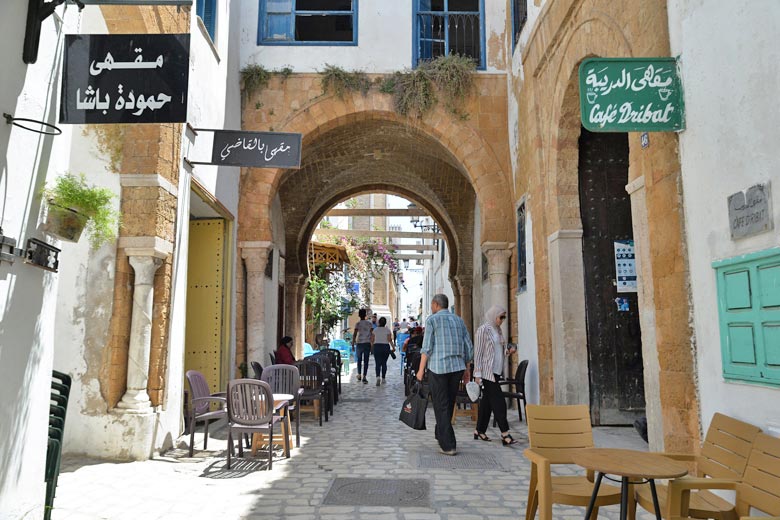
Head inland to the centre of the city at Place de l'Indépendance (Independence Square) instead, and you'll be in the perfect position to enjoy the café culture that abounds on Avenue Habib Bourguiba, the Champs-Élysées of Tunis.
On, then, to the winding passageways of the medina, the city's second World Heritage Site. Its treasures include Kasbah Square and Al Zaytuna Mosque, the city's oldest.
To check out the city's most famous museum, the Bardo, to the west, you'll want to jump in a taxi or grab a ticket for the Tunis Metro tram system.
Carthage, Sidi Bou Said & La Marsa
Set among grandiose seaside villas and a presidential palace, the ruins of Carthage are where myth and history blend into one.
Though there's no evidence that the city was founded by a queen named Dido, it's a fact that its war elephants threatened Rome via an epic Alpine journey, leading to the first city's destruction.
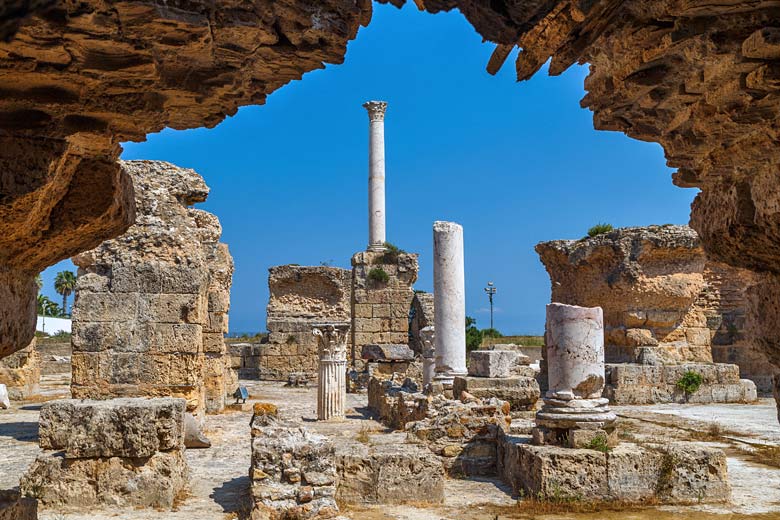
The Baths of Antoninus, theatre, La Malga Cisterns and residential quarter on show today date instead to the Roman rebuilding of Carthage.
Views over the site can be had from Byrsa Hill, home to the Carthage Museum, while opting for an organised tour is a good idea as the remains are spread over a substantial area.
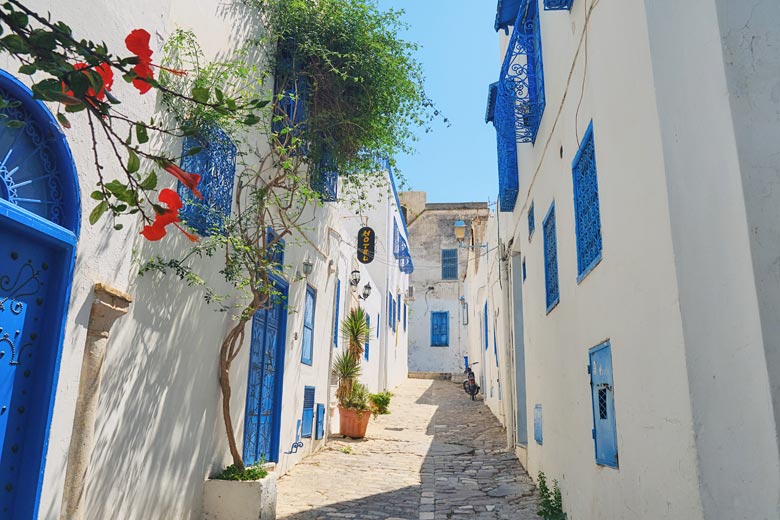
Carthage is easily combined with a trip to Sidi Bou Said and La Marsa. A neighbourhood of blue-and-white villas with commanding Mediterranean vistas lining cobbled streets, Sidi Bou Said has long been the haunt of artists, making it a great place to pick up handcrafted souvenirs or stop for a bite at one of the tempting restaurants.
Nearby La Marsa completes the trio of upmarket northeastern neighbourhoods; the joke goes that the French Riviera is a cheaper spot to buy a home.
If Carthage is all about its heritage and Sidi Bou Said its visual beauty, La Marsa's focus is on its clean, golden beach. At around 3.5 km, there's plenty of space to catch some rays amid the volleyball games, family picnics and skate park on the Corniche at its eastern end.
Around Place de l'Indépendance
The monuments and historic structures of Place de l'Indépendance introduce travellers to central Tunis, connecting the French-built Ville Nouvelle to the centuries-old medina district.
To the square's east lies Avenue Habib Bourguiba, the city's attractive main street of clipped trees, enticing window displays and cafés catering to a mix of locals and tourists. It's an ideal spot for people-watching while cooling down with a citronnade (homemade lemonade).
A short taxi ride north lies The Japanese Garden, which brings a little relaxation to a day in the city. But you'll want to save much of your time for what lies west.
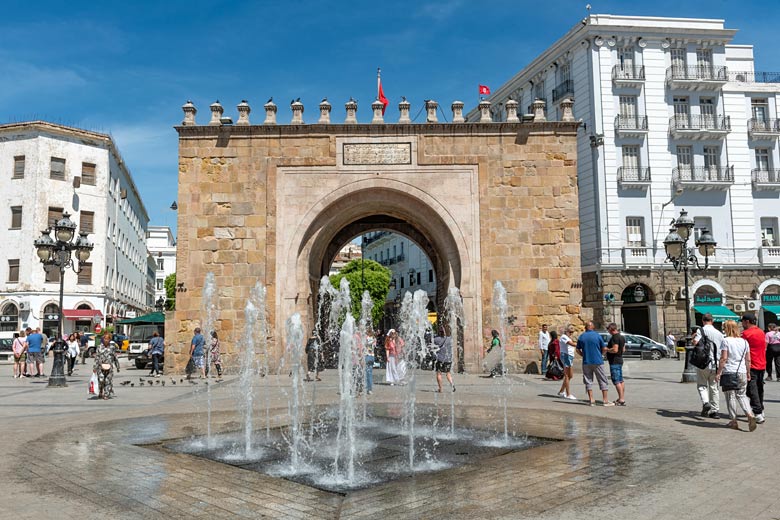
Walkable from Place de l'Indépendance is the Porte de France, or Bab el Bhar, an arched gateway topped with a Tunisian flag and marking the entrance to the city's ancient medina.
Follow Rue de la Kasbah or Rue Jemaa Zaytuna past the stalls of vegetables, shisha pipes and shoes, and you won't get too lost. You'll reach either Kasbah Square, home to City Hall and the impressive modern National Monument, or Al Zaytuna (or Zitouna) Mosque, a structure dating to the early 8th-century CE.
It incorporates 200 columns taken from the ruins of Carthage. Although only Muslims can enter, the courtyard can be admired from surrounding cafés. For more culture, head to one of the city's hammams (Turkish baths) for a steam or massage.
Bardo National Museum
Further out but reachable by line 4 of the Tunis Metro, Bardo National Museum marries the sumptuous surrounds of its palace home with one of the most important collections in the Mediterranean.
Tracing Tunisian history from prehistory to independence, the museum is best known for its mosaics, excavated from sites across the country, which are said to be among the largest collections in the world.
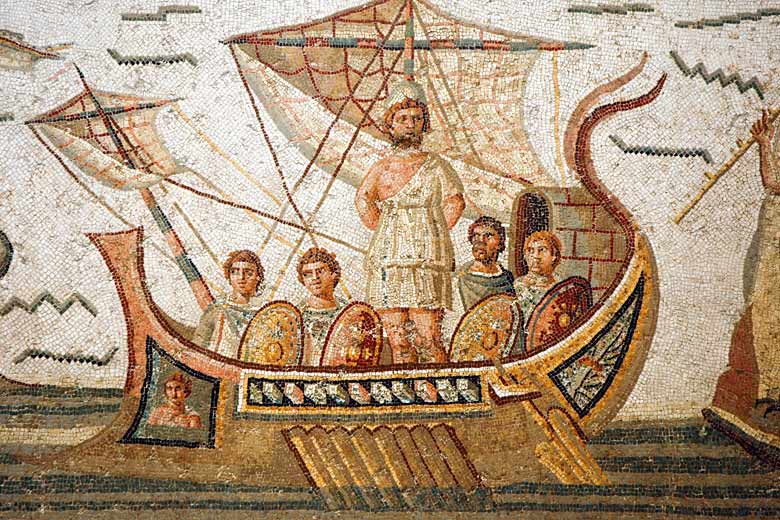
The recovered cargo of a Roman ship that sank off the Tunisian coast and was rediscovered in 1907 is also worth exploring here, while Greek artefacts include those raised from the seabed by none other than famed French diver and oceanographer Jacques Cousteau.
Making the most of your day in Tunis
Few places accept international credit and debit cards or hard currencies like pounds, euros, or dollars, so be sure to obtain some Tunisian dinars, which are confusingly divided into 1000 millimes rather than 100 pennies or cents, unlike most currencies.
Haggling is expected at market stalls; the ultimate price will lie somewhere between 50% and 75% of the original list price. Keep a tight hold of wallets and other valuables in the medina.
English isn't widely spoken, but its use is growing since it is now compulsory in Tunisian schools. Younger Tunisians and those linked with tourism will usually be able to help.
Climate in Tunis
| Jan | Feb | Mar | Apr | May | Jun | Jul | Aug | Sep | Oct | Nov | Dec | |
|---|---|---|---|---|---|---|---|---|---|---|---|---|
| Maximum daytime temperature °F |  59 59 |
61 |
 64 64 |
70 |
 77 77 |
 84 84 |
 91 91 |
91 |
86 |
77 |
68 |
61 |
| Hours of sunshine (daily) | ||||||||||||
| Days with some rainfall |  11 11 |
10 |
11 |
 9 9 |
 6 6 |
 3 3 |
1 |
2 |
4 |
8 |
9 |
11 |
| Sea temperature °F |  59 59 |
57 |
59 |
 61 61 |
 64 64 |
 70 70 |
 75 75 |
 79 79 |
77 |
 73 73 |
68 |
63 |







The above guide shows the climate in Tunis. Find out more about conditions across the country in our complete guide to the climate in Tunisia.
Ready to experience Tunis? See the current offers on itineraries with Marella Cruises.

More about Tunis





Tunis by month
Jan Feb Mar Apr May Jun Jul Aug Sep Oct Nov Dec
Explore holiday destinations
- Beach holidays
- City breaks
- Family holidays
- Half term holidays
- Spring holidays
- Summer holidays
- Autumn holidays
- Winter sun holidays
- Honeymoons
- Coolcations
- Compare places
- Ski resorts
Save with latest deals & discounts
- Holiday offers
- Top travel brands
- Airlines & flights
- Discount hotels
- TUI
- Jet2holidays
- Neilson
- Marella Cruises
- Holiday Extras
- Pierre & Vacances
- Caledonian Travel
- Club Med
Airport parking
- Manchester Airport
- Stansted Airport
- Bristol Airport
- Luton Airport
- Birmingham Airport
- Edinburgh Airport
- Gatwick Airport
- Glasgow Airport
- Newcastle Airport
Airport lounges
- Manchester Airport
- Birmingham Airport
- Bristol Airport
- Edinburgh Airport
- Glasgow Airport
- Heathrow Airport
- Newcastle Airport
- Stansted Airport
- Gatwick Airport
Be inspired
Get your weekly fix of holiday inspiration from some of the world's best travel writers plus save on your next trip with the latest exclusive offers
We promise not to share your details