

Where to stay in Malta in 2026/2027

Malta might be tiny, but it packs more into its 316 sq km than islands 10 times its size. This is the Mediterranean's most beguiling minnow, a limestone knot of honey-coloured cities, Baroque churches, Blue Flag beaches and nightlife that thumps until dawn, all within a bus ride of each other.
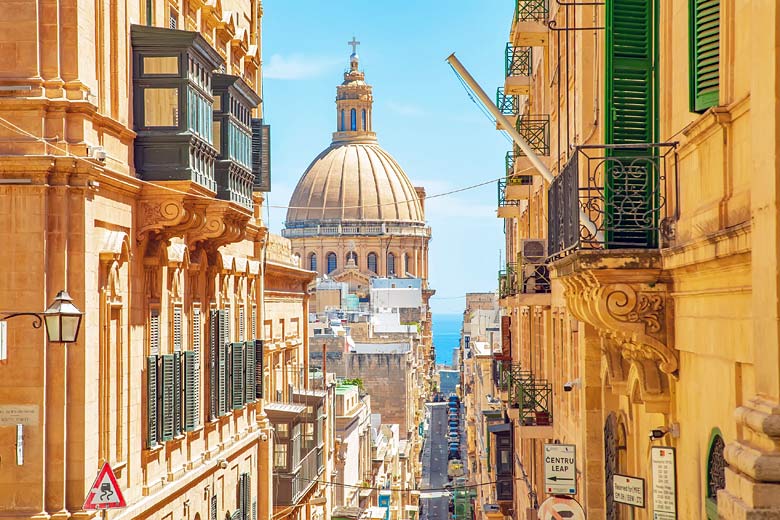
Malta has been fought over, built up and adored by empires from the Phoenicians to the British, and every one of them left their fingerprints on this compact archipelago.
Today it's a holiday all-rounder: a place where you can be diving a shipwreck by breakfast, wandering a fortress city by lunch, and propping up a Paceville bar by midnight. We'll walk you through where to base yourself, what to see, and where to escape to when the main island feels too busy.
Malta - key takeaways
Malta is really three holidays rolled into one. There's the fortress capital, its streets built from creamy limestone and crowned with Baroque grandeur. There's the party-and-poolside resort strip around Sliema and St Julian's.
Then there's the sleepier, greener sister island of Gozo, with tiny Comino and its famous Blue Lagoon thrown in for good measure. Pick the one that suits your holiday as your base, then dip into the others whenever the mood takes you.
But don't let the size fool you into rushing everywhere at once, as each area has a distinct character and rewards taking things slowly.
- Valletta - Best for history, culture & capital-city glamour
- Sliema & St Julian's - Best for nightlife, dining & a lively base without a car
- St Paul's Bay, Buġibba & Qawra - Best for family holidays & value
- Mellieħa & the north - Best for sandy beaches & a slower pace
- Marsaskala & the southeast - Best for a quieter, authentically Maltese stay
- Mdina & Rabat - Best for medieval atmosphere & sunset views
- Central Malta (Mosta, Attard & Naxxar) - Best for local life & gardens
- Gozo - Best for green scenery, diving & rural escape
- Comino - Best for the Blue Lagoon & a lagoon day out
Where is Malta?
Malta sits almost dead centre in the Mediterranean, roughly 80 km south of Sicily and around 300 km north of Libya, making it as much a crossroads of North Africa and Europe as it is a beach holiday destination.
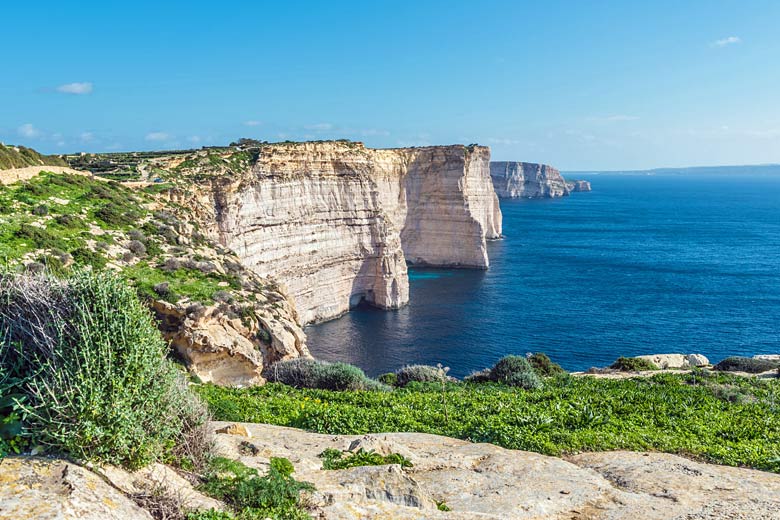
The archipelago comprises three islands: Malta itself, the largest and busiest; Gozo, greener and more rural; and Comino, all but uninhabited bar its famous lagoon.
The main island is compact enough to cross by car in around an hour and a half, with the natural Grand Harbour and Marsamxett Harbour carving out the peninsula on which Valletta and the resort towns of Sliema and St Julian's sit.
The north tapers away towards Ċirkewwa, the ferry gateway to Gozo, while the south and east are quieter, with fishing villages, salt pans and dramatic cliffs.
Where to stay in Malta
Tourism on Malta has boomed since EU accession in 2004 and the budget airline routes that followed. Even so, this is an island that wears its history rather than hides it. Stumble down the wrong street, and you're as likely to hit a 500-year-old bastion wall as a beach club. Pick your base well, and you can have both, without ever needing a hire car.
Valletta
- Best for history, culture & capital-city glamour
Malta's capital is a UNESCO World Heritage Site in its entirety, a honey-stone fortress city built by the Knights of St John after the Great Siege of 1565. It's a small, walkable grid of Baroque churches, auberges and palazzi, ringed by the bastions that still drop sheer into the Grand Harbour.
St John's Co-Cathedral is the showstopper, its restrained facade hiding an interior smothered in gilt and marble, plus a Caravaggio you won't want to rush past.
The Upper Barrakka Gardens deliver one of the Mediterranean's great harbour views, looking straight across to the Three Cities of Birgu, Senglea and Cospicua, themselves worth a wander (or a water-taxi ride) for their own web of fortifications and waterside dining.
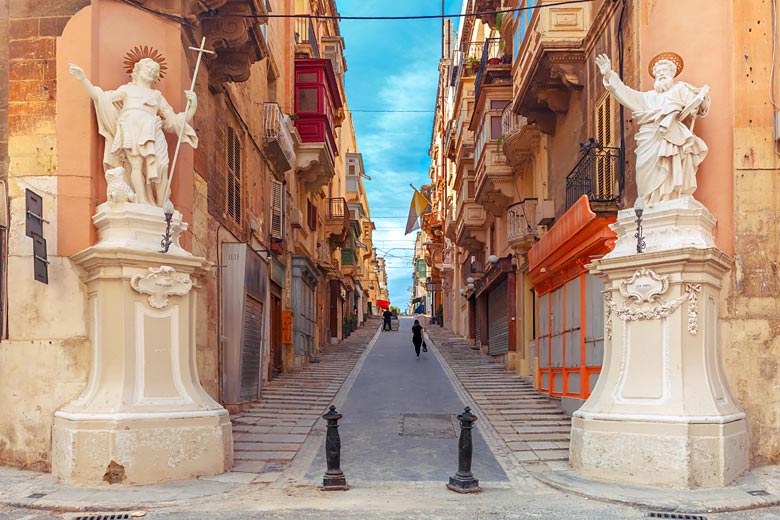
Valletta has properly upped its hotel game in recent years, with boutique conversions of old palaces sitting alongside the grand five-star Phoenicia. Restaurants and rooftop bars have multiplied, too.
By night, head down Strait Street, once the sailors' rowdy 'Gut,' now revived with backstreet wine bars and live jazz, for nightlife that doesn't need Paceville's crowds. It's compact, it's a UNESCO showcase, and it's a really rewarding base if you don't mind ferrying or bussing out to the beaches.
Sliema & St Julian's
- Best for nightlife, dining & a lively base without a car
This is the beating heart of Maltese tourism, a run of seafront promenade that stretches from Sliema's Tigné Point round to St Julian's and its buzzing nightlife hub, Paceville.
There's no sand here, just rocky bathing platforms and lidos, but the water is clean and clear, and what the coastline lacks in sandy beaches it makes up for with the best concentration of hotels, restaurants and bars on the island.
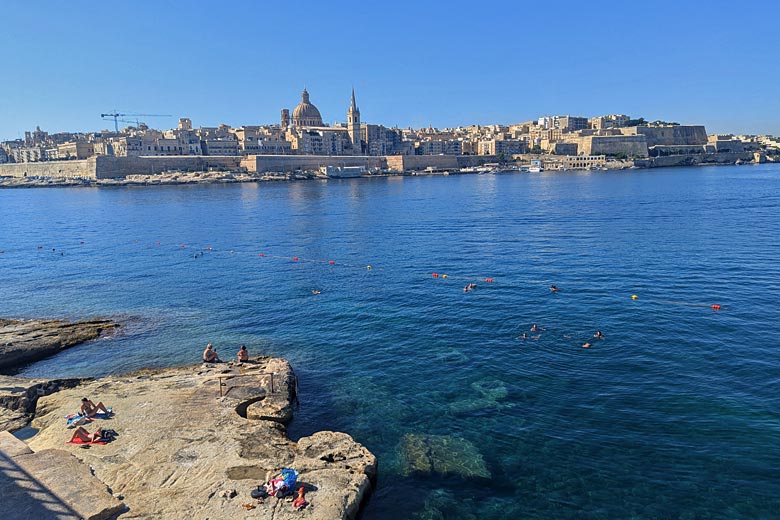
Sliema is the shopping and dining base, with excellent views back across the water to Valletta's skyline, dominated by the dome of the Basilica of Our Lady of Mount Carmel. St Julian's edges it for glamour, home to most of Malta's five-star hotels, along with casinos and upscale boutiques, while St George's Bay has a small but popular sandy beach.
Paceville, tucked just behind it, is where the island's nightlife properly detonates, packed with clubs, bars and late-night energy. It's the easiest base of all if you don't want a car, with regular buses and ferries to Valletta and beyond, and the choice of hotels here is the widest on the island.
St Paul's Bay, Buġibba & Qawra
- Best for family holidays & value
Originally three separate fishing villages, these northern resorts have long since merged and now form Malta's second-largest tourist hub after Sliema and St Julian's.
It's less polished than the capital-adjacent resorts, but that's part of the appeal: expect a purpose-built, all-in resort feel with a long seafront promenade, a good sandy beach, a waterpark and no shortage of value-for-money hotels and apartments.
Buġibba, squeezed in the middle, is the liveliest of the three, centred on a newly refurbished square packed with restaurants and bars. Qawra, further round the headland, is quieter and more residential. Just to the south, the smaller cove of Salina Bay offers a calmer, more local stretch of coast if you fancy a break from the crowds.
This is the classic package-holiday zone, popular with families and anyone after dependable value rather than boutique flair, though standards have crept upmarket in recent years.
Mellieħa & the north
- Best for sandy beaches & a slower pace
Head further north, and the pace drops noticeably. Mellieħa is a hillside village overlooking Għadira Bay (Mellieħa Bay), Malta's biggest beach and the main rival to Golden Bay for the sandy-beach crown. It's a broad sweep of sand backed by dunes, with shallow water that shelves gently, perfect for families.
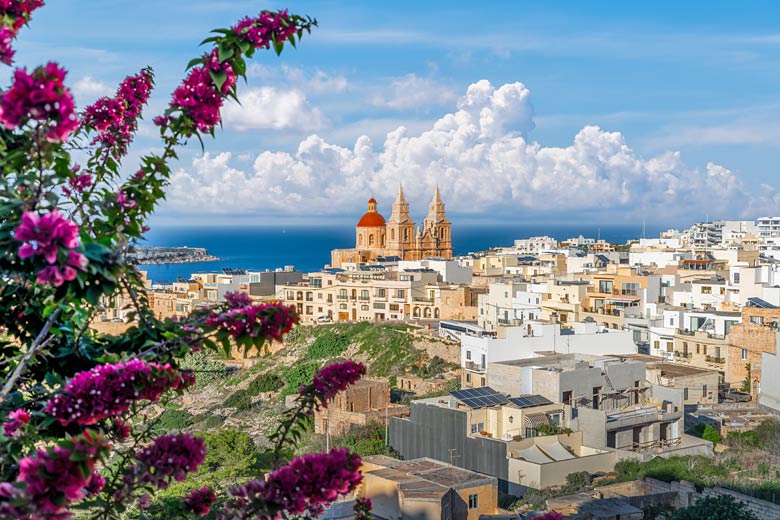
Beyond Mellieħa, the peninsula narrows towards the Marfa Ridge and Ċirkewwa, the ferry terminal for Gozo. Near the ferry landing is Paradise Bay, a little cove with good sand and some of the best sunset views on the island.
This corner trades nightlife for scenery and a noticeably calmer holiday. Just bear in mind that things are spread out up here, so a car makes life easier than relying on buses.
Marsaskala & the southeast
- Best for a low-key, authentically Maltese stay
The southeast is a step away from the resort strip, and that's exactly its charm. Marsaskala is a genuine working harbour town turned low-key resort, with a bayside promenade lined with restaurants rather than nightclubs, and prices that undercut those of the north-west resorts.
It makes a good, cheaper base for exploring the island by car. Just around the coast is the fishing village of Marsaxlokk, with its bobbing luzzu boats among Malta's most photographed scenes. Visit on a Sunday for the fish market and a seafood lunch at one of the harbourside restaurants.
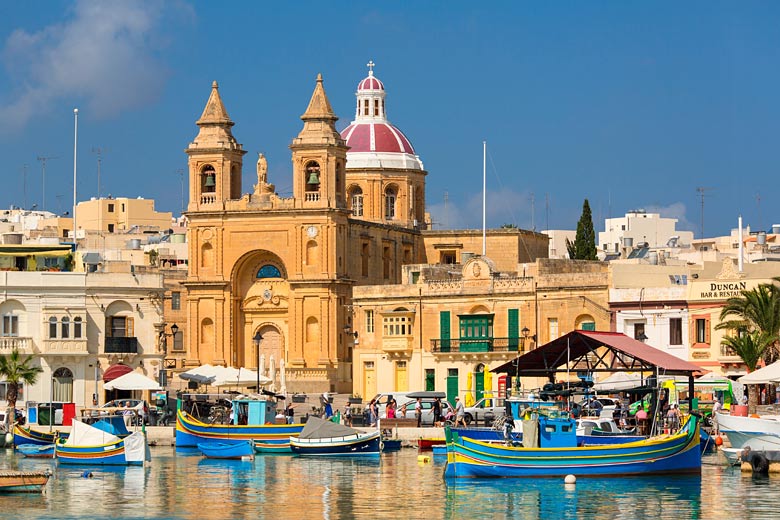
This is a corner of Malta for travellers who've already ticked off Valletta and Sliema and fancy staying where the locals actually live, rather than a resort with sun-loungers stacked to the horizon.
Mdina & Rabat
- Best for medieval magic & sunset views
Long before Valletta existed, Mdina was Malta's capital, and this "Silent City" still feels suspended in time.
A walled, honey-stone hilltop citadel with barely a few hundred residents, it's all narrow medieval lanes, wrought-iron balconies and, at Bastion Square, one of the best sunset panoramas on the island, looking clear across to Mdina's suburb and near-neighbour, Mtarfa, and the patchwork countryside beyond.
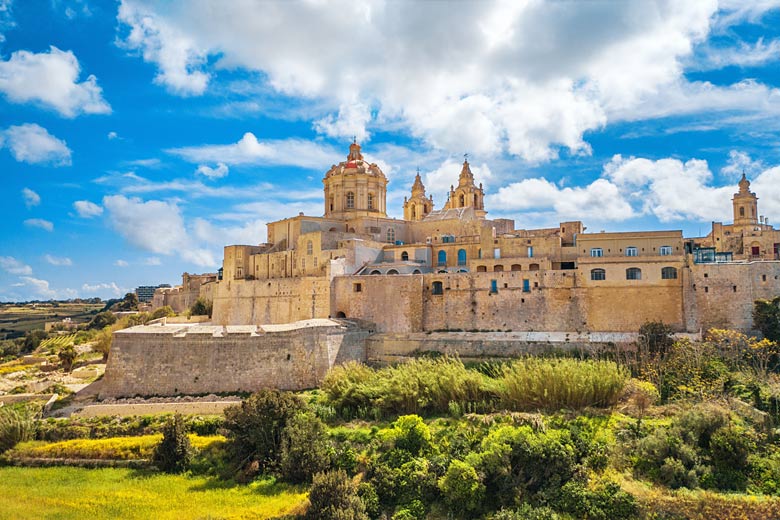
Rabat, just outside the walls, is the busier, more lived-in counterpart, with its own catacombs and churches burrowed into the rock. Neither has much of a resort scene, and there's no beach for miles, but a night or two here, once the day-trip coaches have gone, gives you an entirely different, hushed side of Malta.
Central Malta (Mosta, Attard & Naxxar)
- Best for local life & gardens
Away from the coast, the towns of the Maltese heartland rarely appear on a holiday itinerary, yet they're where you'll find the island living its everyday life.
Mosta is home to the extraordinary Mosta Dome, one of the largest unsupported church domes in the world, while Attard's San Anton Gardens, laid out around a presidential palace, are the loveliest formal gardens on the island, filled with fountains, orange groves and cobbled avenues. Naxxar rounds out the trio with a pretty village core and easy access to just about everywhere else.
None of these towns has resort infrastructure to speak of, but as a self-drive base for exploring the whole island, or simply as a day trip from the coast, this is a different side of Malta that many tourists never see.
Gozo
- Best for green scenery, diving & rural escape
Malta's sister island feels like a different country: quieter, greener and unmistakably rural, with terraced fields, golden-stone farmhouses and a laid-back pace that's a world away from Paceville.
The Gozo Channel ferry from Ċirkewwa (or the faster catamaran direct from Valletta) drops you at Mġarr harbour, a short hop from Victoria, Gozo's small capital, crowned by the Citadel, another walled hilltop fortress with tremendous views.
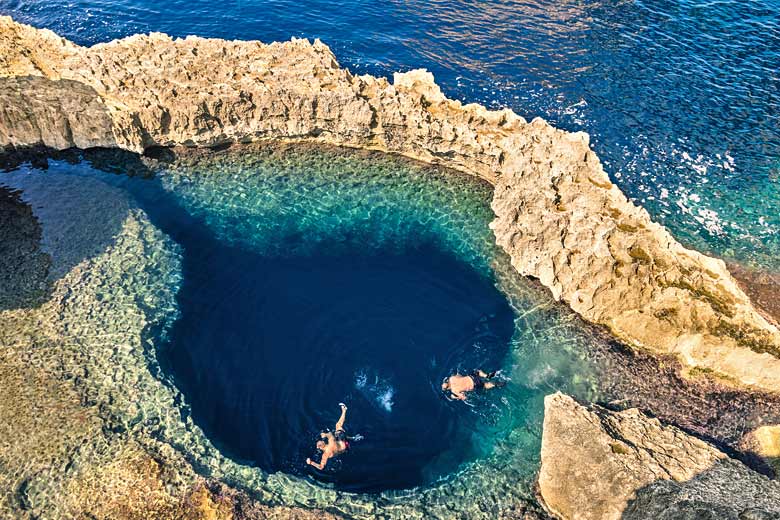
Gozo's coast is where it really shines. Ramla Bay is a wide sweep of red-gold sand backed by low hills; Marsalforn is the main resort village, easy-going and appealing; and Dwejra, once home to the much-photographed Azure Window before it collapsed into the sea in 2017, is now famous for the Blue Hole, one of the Mediterranean's best-loved dive sites.
Gozo rewards a multi-night stay far more than a rushed day trip, though plenty of visitors do it that way.
Comino
- Best for the Blue Lagoon & a lagoon day out
The tiniest of the three islands, Comino, has almost no permanent population and, these days, no hotel worth building your holiday around. What it does have is the Blue Lagoon, a shallow, impossibly turquoise channel between Comino and its neighbouring islets, and one of the most photographed patches of water in the Mediterranean.
The quieter Crystal Lagoon and the sandy Santa Marija Bay offer an escape from the Blue Lagoon's summer crowds, along with sea caves, a scattering of hiking trails and the old Comino Tower.
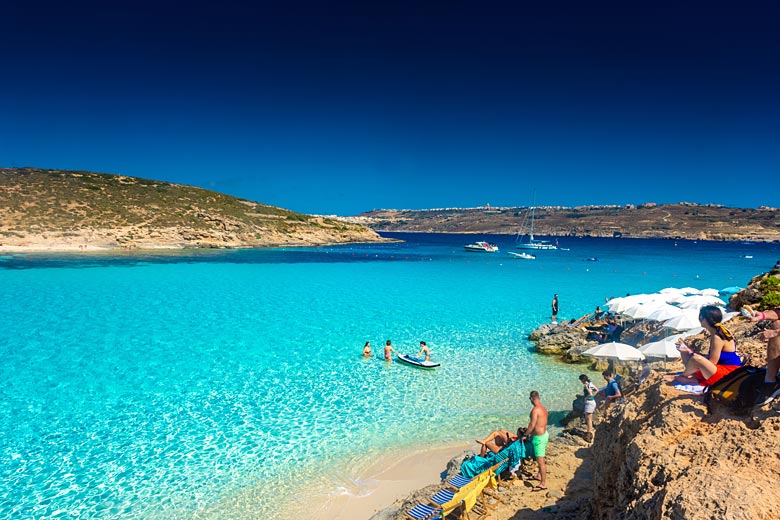
There's nowhere to stay overnight, and no restaurants either, just a few kiosks, so bring cash and a picnic. Comino is really a lagoon day trip rather than a resort in its own right, usually combined with a longer day out to Gozo.
Best things to do in Malta
Malta's size is deceptive; there's an enormous amount packed into this little archipelago.
Beaches & beach clubs
Malta's coastline is mostly rocky, so its sandy beaches are prized: Għadira Bay (Mellieħa), Golden Bay, Paradise Bay and Gozo's Ramla Bay are the pick of them.
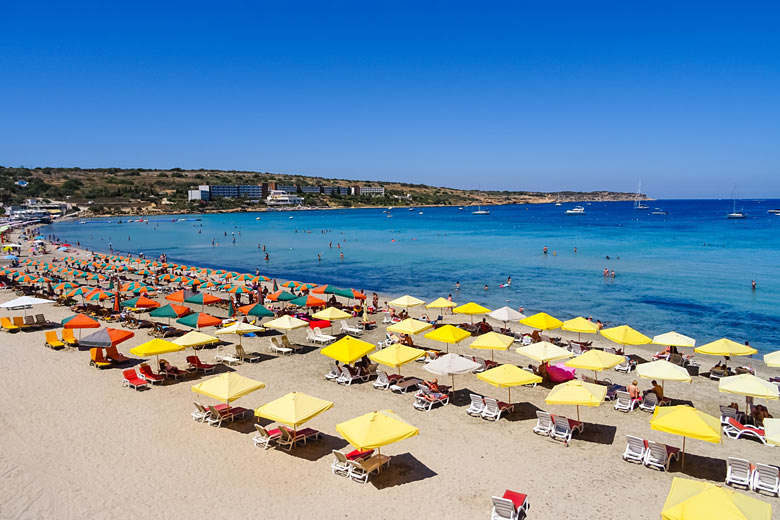
Where there's no sand, lidos and rock-cut bathing platforms fill the gap, especially around Sliema, and the beach-club scene has grown fast in St Julian's and along the Sliema seafront, with sunbeds, DJs and cocktails alongside the swimming.
Historic towns & cultural attractions
Valletta, Mdina and the Three Cities of Birgu, Senglea and Cospicua are the cultural core of any Malta trip, a dense concentration of Knights-era fortifications, palaces and churches rarely matched anywhere in Europe.
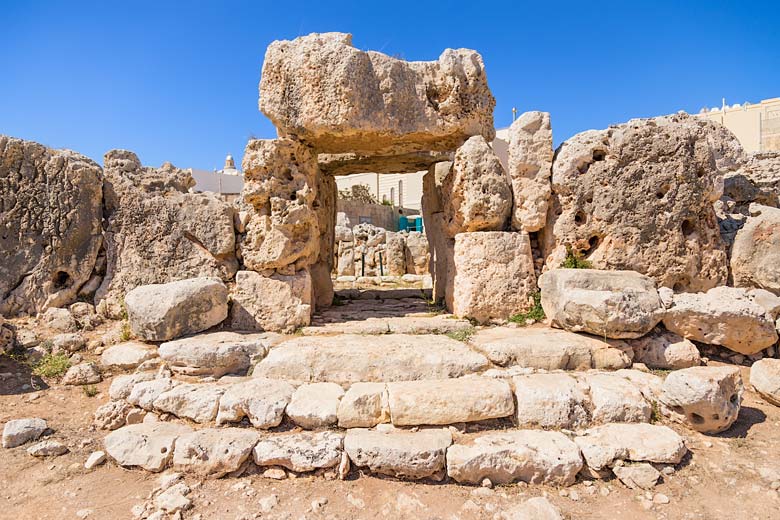
Add in the island's extraordinary prehistoric temples, among the oldest free-standing stone structures on Earth, and Malta punches well above its weight for history buffs.Family-friendly attractions
Popeye Village near Anchor Bay, built as a film set and now a quirky, colourful family attraction, is a firm favourite with kids.
Mellieħa's sandy, shallow bay is the natural choice for a family beach day, and boat trips out to Comino and the Blue Lagoon work brilliantly for older children who love to swim and snorkel.
Food, restaurants & nightlife
Maltese food mixes Sicilian, North African and British influences: expect fresh seafood, rabbit stew (fenkata), flaky pastizzi stuffed with ricotta or curried peas from a hole-in-the-wall bakery, and plenty of good, affordable wine.
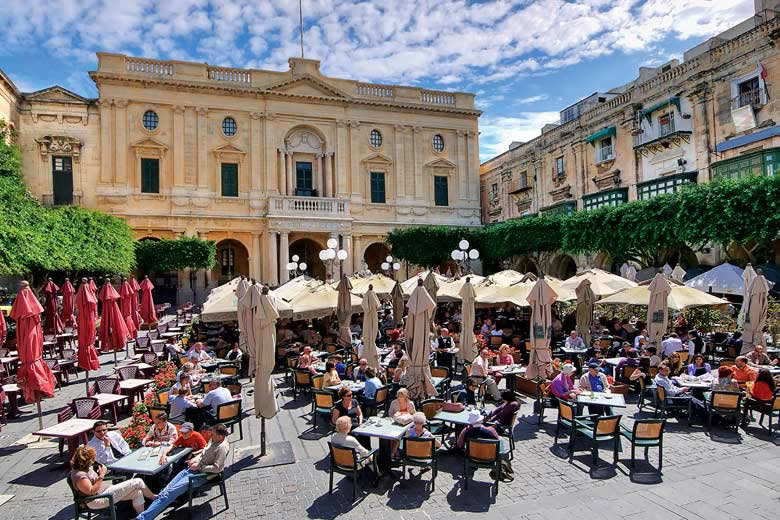
Fine dining has arrived too, with Malta's own MICHELIN Guide since 2020, and Valletta's ION Harbour now holding two stars. For nightlife, Paceville in St Julian's is the undisputed capital, brimming with clubs and late bars, while Valletta and Sliema lean more towards a relaxed evening of dinner and cocktails.
Diving & watersports
Malta and Gozo are among the Mediterranean's best diving destinations, with visibility regularly topping 30 metres and a scattering of wrecks and reefs to explore.
Gozo's Blue Hole is the headline site, but there are dozens more around both islands. There's plenty of scope for sailing, kayaking and jet-skiing too.
Best day trips from Malta
Malta's compact size makes almost everywhere feel like a day trip, but a few stand out.
Gozo
Even if you're not staying over, Gozo more than earns a full day: the Citadel in Victoria, the Ta' Pinu Basilica, Ramla Bay and the Blue Hole at Dwejra can all be squeezed in via the ferry from Ċirkewwa or a direct catamaran from Valletta.
Comino & the Blue Lagoon
Boat trips run from Sliema, Buġibba and Ċirkewwa out to Comino, usually combining the Blue and Crystal Lagoons with a spot of swimming and snorkelling. Many operators now add on a few hours in Gozo too, making for a full and satisfying island-hopping day.
Mdina, Rabat & the Dingli Cliffs
Mdina and Rabat fit easily into half a day. Wander Mdina's medieval lanes, explore Rabat's catacombs, then head out to Dingli Cliffs. They're the highest point in Malta, with the Mediterranean stretching out below and, when the skies are clear, Filfla, a tiny uninhabited islet, visible offshore.
Marsaxlokk, St Peter's Pool & the Blue Grotto
The Sunday fish market at Marsaxlokk, with its brightly painted luzzu fishing boats, pairs neatly with a short boat trip to nearby St Peter's Pool, a natural swimming spot cut into the rocks. For the Blue Grotto, head the other way along the south coast to Żurrieq, where boat trips run into a run of dramatic sea caves.
Sicily
On a really clear day, you can see Sicily from Malta's north coast, and fast catamaran links and short flights make it a viable, if a very long, day trip: Mount Etna and the clifftop town of Taormina are the big draws for those wanting a taste of Italy alongside their Maltese holiday.
FAQs
Where to stay in Malta for the first time?
Sliema or St Julian's, as you get the widest choice of hotels, easy bus and ferry links to Valletta, and no need for a car. If you'd rather be inside the history from the moment you wake up, Valletta itself makes an atmospheric, walkable alternative, though you'll want to head out to the coast for beach days.
Where to stay in Malta for couples?
St Julian's and Sliema both work well for a lively couples' break, with plenty of restaurants and beach clubs. For something quieter and more romantic, a boutique hotel in Valletta or Mdina, both steeped in a candlelit, historic atmosphere, is hard to beat.
Where is best to stay in Malta for an all-inclusive holiday?
Where's best to stay in Malta for nightlife?
Paceville, in St Julian's, is Malta's undisputed party zone. Sliema and Valletta are livelier still for dining and bars without going full clubbing.
Where to stay in Malta without a car?
Sliema, St Julian's and Valletta are all well served by buses and ferries and easy to explore on foot, making them the best choices if you don't want to hire a car.
What are the best beaches in Malta?
Is Malta good for families?
Yes. Mellieħa's shallow, sandy bay, Popeye Village and boat trips out to Comino all work brilliantly for families with children of most ages, and the compact distances mean less time in transit and more time on the beach.
Be inspired
Get your weekly fix of holiday inspiration from some of the world's best travel writers plus save on your next trip with the latest exclusive offers
We promise not to share your details

Explore holiday destinations
- Beach holidays
- City breaks
- Family holidays
- Half term holidays
- Spring holidays
- Summer holidays
- Autumn holidays
- Winter sun holidays
- Honeymoons
- Coolcations
- Compare places
- Ski resorts
Save with latest deals & discounts
- Holiday offers
- Top travel brands
- Airlines & flights
- Discount hotels
- TUI
- Jet2holidays
- Neilson
- Marella Cruises
- Holiday Extras
- Pierre & Vacances
- Caledonian Travel
- Club Med
Airport parking
- Manchester Airport
- Stansted Airport
- Bristol Airport
- Luton Airport
- Birmingham Airport
- Edinburgh Airport
- Gatwick Airport
- Glasgow Airport
- Newcastle Airport
Airport lounges
- Manchester Airport
- Birmingham Airport
- Bristol Airport
- Edinburgh Airport
- Glasgow Airport
- Heathrow Airport
- Newcastle Airport
- Stansted Airport
- Gatwick Airport